Last night, 23 days after Jane Doe filed a lawsuit that brought the Cornell Chi Phi rape allegations into the public eye, I overheard a group of young men outside a taco restaurant jokingly refer to one of their friends as “Matthew Ingalls.”
It was just before 3 a.m. on a Friday night in the East Village. I was tipsy, waiting outside for a guy I'd been going out with to grab some tacos, when I noticed a group of six men in their early twenties chatting nearby. Nothing out of the ordinary. That was until I heard that name, followed by an eruption of laughter as the entire group turned their attention toward one particular friend.
I instantly recognized the name. Most of us do.
And I genuinely could not believe what I was hearing. Here was a group of young men casually turning a horrifying sexual assault case into a punchline, comparing one of their own friends to the alleged ringleader of a gang rape. And here's my hot take: If a group of six men can find humor in something so depraved, I can't help but wonder whether they're projecting, confessing, or simply revealing how little they care. Because what exactly is the joke? What does a man have to say or do for his own friends to compare him to an alleged rapist? And more importantly, what kind of people find that comparison funny?
I instinctively walked away. I couldn't shake the thought that, for someone to earn that nickname among his friends, there must be something about his behavior, his attitudes, or the things he says that makes the comparison amusing to them. And somehow, that possibility was even more disturbing.
The guy I'd been waiting for eventually came outside, and we met near a bar down the street. I didn't tell him what I'd just witnessed. Instead, I grew quiet and reserved for the remainder of our time together.
My mind was racing.
Does he make those jokes? Do his friends? Does he laugh along? Does he truly understand the severity of what happened to that young woman? If one of his friends made a comment like that, would he intervene? Would he hold them accountable? Does he even hold himself accountable?
I felt like I already knew the answer.
It has been a harrowing and disappointing couple of weeks for men. From the response for the Lindsay Clancy trial, Arch Manning laughing at an AI video of a man slapping a woman, Braden Peters (clavicular) going to trial for rape, and now a 2024 resurfaced case of seven Cornell students raping a woman. I have tried to calm myself down enough to write this, but honestly, I am still pissed.
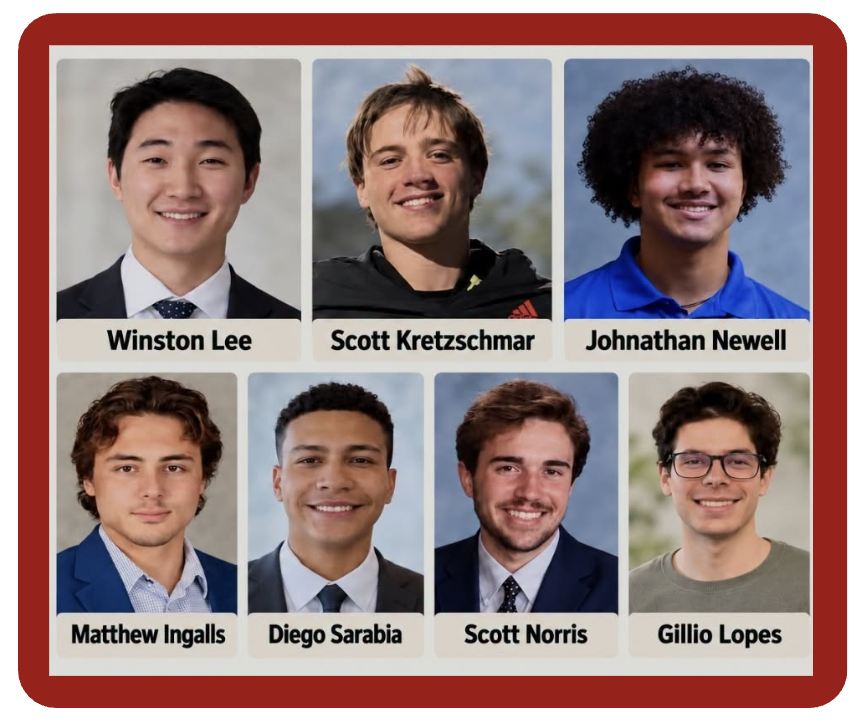
Jane Doe filed her civil complaint on September 16, 2026, nearly two years after the alleged assault. The Cornell Daily Sun brought renewed attention to the case. The seven men named are Matthew Ingalls, Johnathan Newell, Winston Lee, Gillio Lopes, Diego Sarabia, Scott Norris, and Scott Kretzschmar. Several dispute the allegations. As of October 5, no criminal charges had been filed; Attorney General Letitia James had been appointed to oversee the reopened investigation, according to the Associated Press.
The complaint explains in excruciating detail Doe’s account of arriving at the fraternity house intoxicated around 11 p.m. and planning to see her friend, Matthew Ingalls. According to the complaint, Ingalls proposed a threesome, led her upstairs, and later provided a substance described as ketamine, along with additional alcohol. At 1:42 a.m., Johnathan Newell allegedly sent a gut-wrenching message to the fraternity’s Snapchat group: “Free pussy in alum pu,” inviting other members to join. Some responded with further disturbing comments. The complaint states that the assault ended around 5:45 a.m., when Doe lost consciousness. She later awoke and returned to her sorority house.
Ever since that morning, Doe has been fighting for justice. The complaint says she reported the incident to Cornell University Police on November 8, 2024, and that the chapter and several students were temporarily suspended. It also says the students were offered the opportunity to mitigate their conduct by submitting essays. Wow. Who would have thought a simple essay could prevent sexual assault and violence toward women?
Cornell’s investigation resulted in expulsions and suspensions, and the fraternity chapter was barred from campus. Reporting on disciplinary records describes two expulsions and a range of other sanctions. The university panel did not find every defendant responsible for sexual assault. But that does not make the question of accountability disappear. I still want to know what those consequences were meant to accomplish and whether they were enough.
Before I continue, I want to explain my resentment toward the label “Cornell Seven.” Each of those seven names and the additional 50 members in the Chi Phi fraternity bystanders in that group chat should be ingrained in our minds, rather than disappearing into a collective nickname. I want to remember who was accused and what was alleged, even twenty years from now. I am not sure who coined the term, but to my ear, it echoes the Central Park Five. They are the “Cornell Rapists”. Those boys were falsely accused and imprisoned for a crime they did not commit. Although I was not here to witness their trials firsthand, I am still burdened by what happened to them. Still, the resemblance bothers me. I see the name comparison deplorable and incomparable. It is heinous that they are being coined after a group of boys who served prison time for a crime they did not commit while the seven rapists have yet to see a court room. These are separate cases, and I do not want a familiar-sounding name to do the thinking for us.
I also want to make clear whom I am talking about: predatory men and the people who excuse them. If that is not you, I do not see why asking you to challenge that behavior should make you feel threatened or targeted. I am not here to explain every part of criminal procedure, institutional negligence, or systemic failure. That is well above my pay grade, and my best friend in law school can have the mic for that one. I want to talk about the men who harm women and the men who insist their friends could never be among them, choosing submission. Carrying on.
I saw the headlines after work. Even writing this is difficult and weighs heavily on me. The feeling is one of a kind, yet so familiar between women. There is not a single woman I know who has not experienced some sort of sexual abuse or assault.
As a few know, I was quite literally kidnapped for about 30 minutes four years ago. Well maybe it was an attempted kidnap. Halloween of 2022, I was Tinker Bell, eighteen years old and full of life. I still am. Naive to the intricacies and ways of men, for sure. I remember walking back to my dorm in the East Village in the world’s highest heels, because that was obviously necessary to be Tinker Bell. I mean, come on. She flies.
My dorm was two streets north and one street east of the bar I left around 3 a.m. My friends had left about ten minutes earlier, but I told them I was fine because I had made friends inside. I probably took six steps in the correct direction before a group of six to eight men, who looked to be in their early or mid twenties, complimented my costume. One asked if I needed assistance getting home safely, if it was close enough. Because, of course, I was wearing the world’s tallest heels. Naively, I said thank you, hopped onto his back, and proceeded to guide them toward my dorm. Looking back, I wonder what that scene looked like to anyone passing: a young, intoxicated woman being carried through the East Village, surrounded by men.
They did a great job getting me to my dorm. They seemed to fail at the part where they were supposed to put me down. As we approached my building, I politely tapped the man’s chest and asked to get off. The instant tightening of his hands around my legs is imprinted in my mind. He ignored me and kept walking, the others moving with him as if they collectively knew their plan with me. At the corner, he fell and dropped me. Before I could get away, a second man picked me up over his shoulder, my legs in the air and my head facing the concrete. The group began walking north, away from my dorm.
I started to panic, struggling to believe that something so textbook was happening to me. Oddly enough, they tried to make small talk as though we were friends catching up. I am not sure friends usually grip your body so tightly that you cannot squirm away. I asked which bar we were going to and said my friends would want to join, while trying to reach my sleeping roommates through Life360. I thought my heart could not drop any further. Then the man holding me said we were not going to a bar. Their hotel was only a few minutes away.
I begged them to let me go and threatened to scream. I remember thinking that, if we reached the hotel, someone at the front desk might recognize how wrong the situation was. Before we got there, I of course was saved by women. Thankfully, my fashion and liberal arts university is renowned for cigarettes being smoked at all hours of the day to maintain a sound mind. A students saw me struggling, followed the men, confronted them, and physically pulled me away. They walked me back to my dorm, repeatedly asking whether I was okay or needed to go somewhere else. I was in shock, running through what might have happened if they had not intervened.
The morning after, and to this day, I have not been able to think clearly about the situation and what could have happened. Whether I would have even woken up that day. I remember my head spinning and struggling to process what was happening as it happened. Sometimes I wonder whether I have passed any of them at a grocery store, a bar, or on a dating app. Would any of them recognize me? I would never know because I do not remember a single face.
That awful experience kicked so much alertness into my life. Like, come on, Lauren. You are eighteen years old, running around the city with a dream and a fake ID. I ended up telling a few friends what happened, and of course they felt sorry for me and apprehensive for my future interactions with men. Some responses were less reassuring. I was met with a few versions of “Why would you willingly trust a group of men?” The question shifted the blame for what happened, and what could have happened, onto me. I accepted help getting home. I did not consent to being restrained and carried somewhere else. That decision belonged to them.
I can look back and wish I had made different choices. I do. But we should be working toward a society where we want to keep each other safe and predators are not so comfortable being predators. The women who helped me did not stop to ask why I had gotten onto his back. They saw an in appropriate situation, and they helped me.
But what about the men who stood by? I find it difficult to believe that not one person in that group surrounding me felt something was wrong. Perhaps they just didn’t want to “ruin the vibes”. I mean what else did I expect, of course putting an end to my kidnapping and inevitable rape would be such a buzz kill. How selfish of me to think otherwise! I cannot tell you what was going through their heads. I can tell you that none of them stopped it. That is why the Cornell group chat strikes such a nerve.
What horrifies me, and outrages so many women, is how passive some men become when their friends do something deplorable. I think part of the problem is that each man assumes the others approve, and nobody wants to be the first to break rank. The Chi Phi group chat makes that possibility unbearable to consider. For anyone who saw those messages and understood what was happening, calling out a fraternity brother or alerting authorities could have meant intervening in an assault. I struggle to comprehend treating a friend’s approval as more important than a woman’s safety. The complaint places the message roughly four hours before the alleged assault ended. Four hours in which someone aware of what was happening could have tried to stop it. The thought of choosing silence, and living with that choice, makes my skin crawl.
This case has inspired a discourse within the men in my life. Resentfully, I ask about where they fit in instances like this. I am often told that they do not know anyone who would do such horrors. Their friends are great guys. If it is not you and not your friends, who is it? According to the CDC, close to half of American women have experienced contact sexual violence, and over a fifth have experienced rape or an attempt. Cornell’s 2025 survey found that 35 percent of responding undergraduate women reported nonconsensual sexual contact during their time there. The survey’s response rate was 15 percent. Still, I want to know where that certainty comes from.
I know about fifteen women I could call right now, including myself, who have being drugged on a night out. I wonder how many friends of the men who drug people know that their friend has those substances in his pocket and intends to use them. At some point, knowing something is wrong has to become a responsibility to ask.
Young men are watching the precedent these institutions set. An established university should be able to show students what protection and accountability look like. I can not imagine how many people could be applying or especially applying to the university knowing they could get away with such heinous crimes. Cornell is not the first institution to face these questions, and it will not be the last. Institutional consequences communicate norms. Students need to understand what follows a report of severe sexual violence to have any reason to trust the process. I do not want a statement of concern to be the end of the conversation.
What horrifies me is how complacent someone can become about his friends’ behavior because confronting it would make things awkward. A peer-reviewed review of campus sexual violence prevention describes an experiment by Ruschelle M. Leone, Dominic J. Parrott, and Kevin M. Swartout: men exposed to sexually objectifying comments from male peers were less likely to intervene in a simulated situation involving sexual aggression than men exposed to neutral comments. If male peer approval can reinforce bad behavior, why are we not equally interested in the power of male disapproval?
So, men, enlighten me. What exactly do you guys talk about besides football, gambling, fishing, beer, and whether you could defeat a chimp in a fistfight? Was that misandrist of me? But seriously, just a few weeks ago, an idiotic debate had men defending their ability to beat a chimp in a fight. The confidence alone was hysterical. First of all, why are some men daydreaming about fighting innocent animals? Is that the new test of manliness? I personally think “chimp” is standing in for “women,” but that is a conversation for another time. Where is the guy demanding a gloves-off WWE fight with a chimp now? I would love to see him, and all the other foolish men entertaining fantasies of that manner, put that rage toward confronting actual human predators.
Men, why don’t we invite more conversation topics on top of the beer and football. How about pondering how to get your peers to stop touching women without consent? Like, “Hey, bro, what are we going to do about this, because we are supposedly the natural protectors of the world?” It can start with asking what your friend means by a comment, or telling him that a woman saying no is the end of the discussion. Where are the valiant men trying to put an end to violence toward women?
We are told that men bond over “locker-room talk.” It is apparently normal. Boys will be boys. Men connect and relating to each other at the expense of women, and we are supposed to accept that explanation. I worry about what becomes easier to tolerate when disrespect is treated as a condition of belonging. An eye-opening example is Arch Manning’s amusement over an AI-generated video of his coach, Steve Sarkisian, slapping ESPN reporter Holly Rowe. He literally looked around the conference room telling everyone how funny he thought the clip was, waiting for other’s approval for his distasteful amusement. Manning later apologized, and Rowe accepted his apology, according to reporting on the incident. I still find his original response deplorable. Crass does not begin to cover it.
This reminds me of comedians like Shane Gillis. I mean, for Christ’s sake, there is literally a video by The Comedy Historian titled “Shane Gillis Making Savage Jokes About Women for 25 Minutes Straight”. Why are women always the butt of the joke? I can barely go a day without hearing a “that’s what she said.” This leaves me wondering how vacant and boring some men must be if this is all someone can contribute. Surely there is something else in this vast world you find pleasure in talking about. I did not think knowing not to laugh at violence toward someone was a lesson we still needed to teach adults.
Then there are the influencers offering young men a sense of belonging through resentment. I keep wondering who is teaching boys what masculinity means right now, and what happens when the person they look up to keeps telling them women are the problem. A 2024 study in Sex Roles surveyed 2,857 Swedish men and found that younger men following more misogynistic “manfluencers” were more likely to dehumanize women. Two experiments also found that threatening messages from a fictional influencer increased misogynistic attitudes and mistrust among younger men, especially those who felt rejected by women. But come on.
Some of these responses add to my point about men who only believe other men or seek validation from each other. I think belonging to that circle can become more important than questioning what the circle believes. A woman describes what happened to her, and suddenly she has to defend her credibility against a man's reputation as a “great guy.” His friends' approval seems to count for more than her experience. If women keep telling you they have been sexually assaulted, waiting for every man responsible to come forward and publicly admit it is ridiculous. Oh, yes, because that is supposed to happen.
When the men you look up to keep telling you women are manipulative or untrustworthy, I think it becomes easier to dismiss a woman than reconsider the people whose approval you want. Listening to her might mean admitting your friend is capable of something you never wanted to imagine. The problem is not that every man in the room approves. It is that every man assumes the other men approve, and nobody wants to be the first one to break rank.
The male loneliness conversation belongs here, too. Pew Research Center found that men and women reported frequent loneliness at similar rates, while women were more likely to turn to a wider network for emotional support. So perhaps part of the issue is what men feel allowed to ask of the people they already have. I see more of a context for friendship in some male relationships than content. We like the same sports team, so we are friends. We enjoy the same outdoor activity, so we are friends.
Holding ourselves to a high standard requires taking the time to ask our friends uncomfortable questions. I want to know what they think about women’s safety and how they respond when a woman describes something their friend did. Can you question someone’s behavior without being accused of disloyalty? You should be able to tell a friend that something is cruel without becoming the problem yourself. Men, if women’s protection is actually top of mind, make room for those conversations.
I have observed female friendships that are collaborative and full of emotional substance. But I do wonder why the communities I see organizing around women’s safety are so often led by women. I want to see groups of men organizing around what they can do about the behavior of other men. I want men to ask their friends these questions, too.
I see people rebut misogyny with “What if that were your mother, sister, or girlfriend?” But I cast that away. I think some men only grant empathy, respect, or value to a woman when she is explicitly tied to a man—as his wife, daughter, sister, or mother. They seem to view other women as an outside group whose lives and experiences are entirely separate from their own. I would call that “proximate” empathy: needing to map a woman's existence onto a man you already love or respect to comprehend her capacity for pain or dignity. She is already a human being. I understand that imagining someone you love in danger can make a story feel immediate. It should not be the requirement.
That is what frustrates me about the reminder. We are trying to make a woman's suffering matter by explaining what it would cost a man who loves her. Her pain should be enough to make you care before you know anything about her family or relationship status. Loving your mother and having friends who are women does not automatically mean you respect women. You can care about the women in your life and still dehumanize the woman you do not know.
I think this is part of what patriarchal social structures teach: to prioritize the opinions, honor, and humanity of other men. Under that dynamic, a woman's value is elevated because she becomes a vehicle for another man's stakes. If her connection to him is what finally makes her worthy of empathy, I want to know how much of that concern is for her. Respect has to extend to the woman you do not know, before someone reminds you she could belong to your life.
The vitriol directed at Jane Doe, the accusations, the mockery, jokes makes my skin crawl.
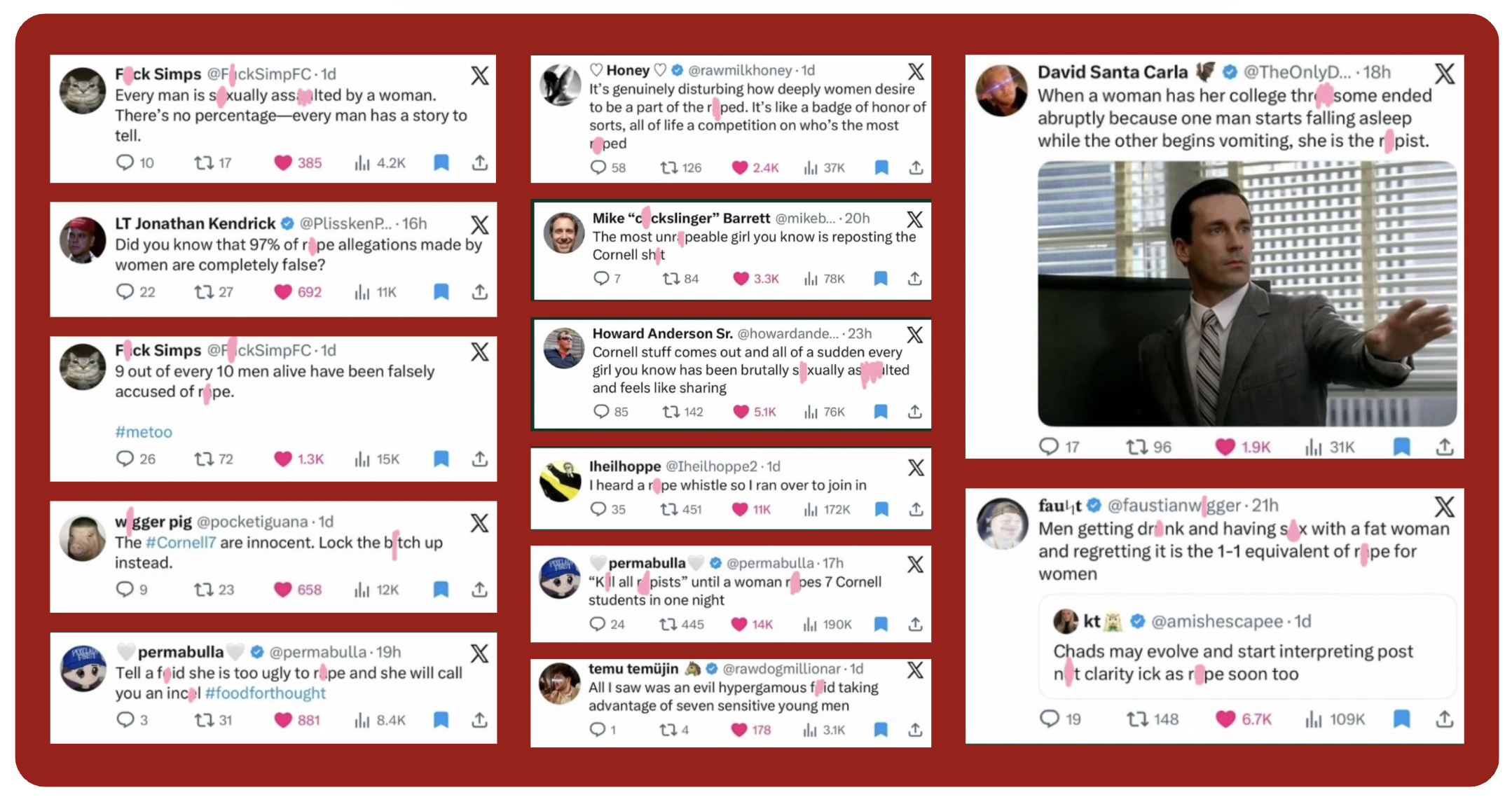
Look at those like counts. I never thought I would live in a time when people would be so open about defending this kind of cruelty. The echo chamber is right there: someone posts something disgusting, other people validate it, and the joke gets to keep moving. I can still find the response despicable. And I do not think every man supports that rhetoric. Silence does not tell the person posting it that anyone objects.
We can go on and on with examples and questions about casual misogyny and men who stand by. At some point, these conversations need to become action. It comes down to men challenging other men and holding each other accountable. It sounds easier said than done, and almost obvious, but being able to “kill the vibe” by standing up for what is right has to be part of changing these communities.
So, what do we do with these passive, often-dismissed-as-“useless” men? Do we still hold out hope that they can be reformed, or do we accept that some men would rather preserve their cowardice than challenge it? Perhaps we stop procreating with the less valiant men so that their “useless” DNA dies with them.
I digress.
The Cut published an article, “What Are Fathers Telling Their Sons About Cornell?”, about the conversations fathers are having with their boys. Jason, a father of two using a pseudonym, describes men bonding through dehumanization. “They see the girl as a category instead of a person,” he says. His point is that boys need to recognize and stop that thinking. Another father emphasizes the courage it takes to act when fitting in feels more important. That is the part that interests me: what happens when knowing right from wrong costs you your place in the group?
Because, to be frank, so much of the awareness and begging for an end to sexual violence that I see is coming from women. I want to hear these conversations between men, too. An echo chamber of boys reciting basic consent logic is not enough for me. It is important to teach that, in group settings, wanting to fit in does not relieve you of the responsibility to stand up when others cannot. Even if it costs your friendships, makes you uncool, or simply ruins a vibe. Being able to repeat a rule is not the same as being willing to enforce it among your friends.
I even saw a TikTok by a young man I remember as Jake Seel, who described calling out someone in his group chat for sharing an insensitive tweet about Jane Doe. As I remember it, he said he was surprised because he thought his friends would have known better. He told the friend it was not funny, and said people began removing their likes. He questioned why men find jokes at the expense of someone’s trauma funny and how they think they can get away with it. But that is exactly my point. Someone in the group needs to tell them they cannot.
The TikTok and the fathers’ accounts are examples of the response I want to see and do leave me with a sliver of hope. Think about how many boys could hear that it is more than okay to call each other out when something is wrong, no matter the scale, and that they do not have to be followers. I want boys to know they can stand apart from the group. That may mean risking being called weak or left out next time. I think that is exactly the mountain we need to climb. Male peers can help change what their groups tolerate. Women should not have to keep begging them to try.
The sad truth is that we may never live in a world without murderers, rapists, and raging incel misogynists. We can still challenge the culture that supports them and demand accountability. I clearly have so many questions that research and articles cannot explain to me, or at least leave me satisfied. I believe I am exclaiming my pain and frustration to men, asking them why they or their peers are the way they are and whether anything will be done about it. Or is this another story we are going to forget in a few weeks? I am frightened to bring a child into this world unless something changes for their protection.